
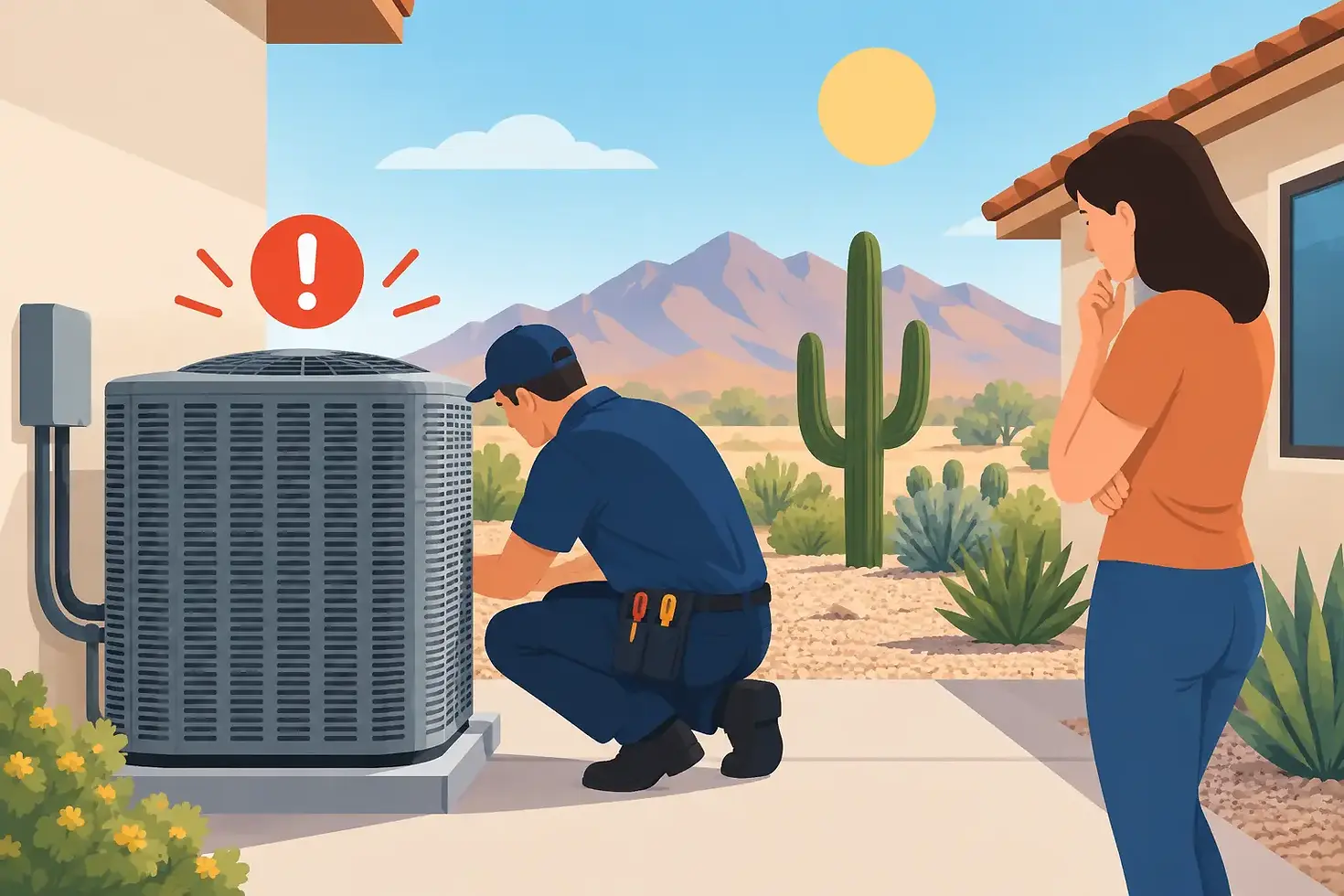
What Counts as an HVAC Emergency in Arizona?

When your air conditioner stops working during a Phoenix summer afternoon, the question is not always whether you are uncomfortable. It is whether the situation is unsafe. Knowing what counts as HVAC emergency can help you protect your household, prevent further equipment damage, and get the right help without delay.
For Arizona homeowners, cooling is more than a convenience during extreme heat. A loss of air conditioning can quickly become a health concern for infants, older adults, pets, people with medical conditions, and anyone unable to leave the home. Other HVAC issues, including electrical odors, gas smells, and carbon monoxide concerns, require immediate action regardless of the season.
What Counts as an HVAC Emergency?
An HVAC emergency is a heating, cooling, or ventilation problem that creates an immediate safety risk, exposes occupants to dangerous temperatures, causes significant property damage, or could lead to serious damage if the system keeps running.
Not every repair needs a middle-of-the-night service call. A system that is cooling a few degrees less efficiently, making a mild new noise, or due for maintenance can often wait for a scheduled appointment. But if there is a risk to people, your home, or your equipment, it is time to treat the problem as urgent.
In the Valley, the line can shift with the weather. An AC failure at 78 degrees overnight may be inconvenient for a healthy household with fans and open windows. The same failure when outdoor temperatures are above 105 degrees is far more serious, especially if vulnerable family members are inside.
AC Problems That Need Fast Attention
No Air Conditioning During Dangerous Heat
A complete cooling failure during extreme Arizona heat is one of the most common HVAC emergencies. Indoor temperatures can climb fast, particularly in homes with direct sun exposure, poor insulation, or upper-floor bedrooms. Do not wait until someone feels ill to act.
Move everyone to a cooler location if you can, drink water, close blinds to reduce solar heat, and use fans only as a temporary comfort measure. Fans do not lower room temperature, and they are not a replacement for working cooling when the heat is severe. If anyone shows signs of heat exhaustion or heat stroke, seek medical care immediately.
Burning Smells, Smoke, or Electrical Issues
A faint dusty smell when you first turn on heat after months of nonuse can be normal. A burning plastic smell, hot electrical odor, visible smoke, sparking, or a repeatedly tripped breaker is not normal.
Turn the HVAC system off at the thermostat. If you can safely do so, turn off power to the unit at its dedicated breaker. Do not repeatedly reset a breaker or continue running equipment that smells like it is overheating. Electrical problems can damage motors, wiring, capacitors, and control boards, and they can create a fire hazard.
Water Leaks That Threaten Your Home
Some condensation around an AC component is expected. Water pooling near an indoor air handler, dripping through a ceiling, soaking drywall, or leaking near electrical components needs prompt attention. In Arizona, clogged condensate drains are a frequent source of water damage because air conditioners run so often.
Turn the system off if water is actively leaking indoors. Place towels or a container under the leak only if it is safe, then arrange emergency service. Continuing to run the system can worsen ceiling damage, encourage mold growth, and create electrical concerns.
Loud Mechanical Sounds or Severe Vibration
A brief click at startup is not usually an emergency. Grinding, screeching, banging, metal-on-metal sounds, or violent shaking can point to a failing motor, loose component, blower problem, or compressor issue. Shut the system down rather than hoping the noise works itself out.
Running a failing component can turn a repairable issue into a much more costly replacement. The sooner a certified technician can diagnose the cause, the better the chance of protecting the system.
Heating and Fireplace Emergencies
Arizona winters may be mild compared with other parts of the country, but heating problems can still become urgent, especially overnight or for seniors and households with young children. A furnace that will not start during a cold spell deserves timely attention. A furnace or fireplace that may be producing dangerous combustion gases needs immediate action.
Gas Smells or Carbon Monoxide Alarms
If you smell natural gas or suspect a gas leak, leave the home immediately. Do not turn lights or appliances on or off, use a phone inside the home, light a match, or start a vehicle nearby. Once you are safely outside and away from the area, contact your gas utility or emergency services as appropriate.
A carbon monoxide alarm should always be taken seriously. Leave the building, get to fresh air, and call emergency services. Carbon monoxide has no color or odor, and exposure can cause headache, dizziness, nausea, confusion, and worse. Do not reenter the home until emergency responders say it is safe.
Do not try to diagnose a suspected gas leak or carbon monoxide issue yourself. Your safety comes first, and HVAC service should follow only after the immediate hazard has been addressed.
Soot, Smoke, or Unusual Fireplace Behavior
A gas fireplace that produces excessive soot, smoke, unusual flames, or a strong odor should be turned off and inspected. These signs may indicate a venting, burner, ignition, or combustion problem. Fireplace concerns are especially important because they involve heat, fuel, and indoor air quality in the same space your family uses to relax.
When It Can Wait Until Regular Service Hours
Homeowners do not need to call for emergency service every time the thermostat displays an alert or the home feels slightly warmer than usual. If the system is still operating safely, there is no burning smell, leak, electrical issue, or gas concern, and indoor conditions are manageable, a scheduled repair may be the better choice.
Examples include weak airflow in one room, a thermostat that needs programming, a minor rattle, a filter that needs changing, or an AC unit that is running but not quite keeping up on a record-hot afternoon. These problems still deserve professional attention, but they usually do not require an emergency response unless conditions worsen.
The key difference is risk. Ask yourself: Is anyone in danger from the temperature? Is there a chance of fire, gas exposure, carbon monoxide, or water damage? Could continuing to run this system cause more damage? If the answer is yes, act quickly.
What to Do Before an Emergency HVAC Technician Arrives
After calling for help, focus on keeping people safe and preventing additional damage. Turn the HVAC system off if it is leaking, smoking, making severe noises, or producing an electrical smell. Keep children and pets away from the equipment. If an indoor unit is leaking, protect nearby belongings and avoid touching wet areas near electrical wiring.
For an AC outage during extreme heat, use practical short-term measures. Close curtains and blinds, avoid using ovens or other heat-producing appliances, drink water, and relocate vulnerable household members to a cooler place if possible. Check on elderly neighbors and family members as well. Heat-related illness can develop quickly.
It also helps to note what happened before the problem started. Did the breaker trip? Did you hear a loud sound? Was the system blowing warm air before it stopped? Did a thermostat message appear? Clear details help a technician arrive prepared and diagnose the issue efficiently.
Preventing the Next Urgent Call
Many emergencies cannot be predicted, but routine maintenance reduces the likelihood of sudden failure. Seasonal inspections give a technician the opportunity to check electrical connections, capacitors, drain lines, motors, refrigerant performance, filters, safety controls, and other components that work hard through Arizona's long cooling season.
Homeowners can help by changing filters on schedule, keeping the outdoor unit clear of debris, watching for water around indoor equipment, and addressing small changes before they become major disruptions. A system that starts cycling frequently, struggles to cool, or makes new noises is asking for attention.
When comfort or safety cannot wait, The Trusted Tech Cooling and Heating LLC is ready to provide professional emergency support with the honest guidance local families deserve. Trust your instincts: if an HVAC issue feels unsafe, shut the system down when appropriate and get qualified help right away.


Comments