
Homeowner Ductwork Repair Guide for Phoenix Homes

A room that never cools down, a vent that barely moves air, and utility bills that climb during a Phoenix summer can all point to the same hidden problem: damaged ductwork. This homeowner ductwork repair guide helps you recognize what may be happening above the ceiling or in the attic, take safe first steps, and decide when a licensed HVAC technician should handle the repair.
Your ducts are the delivery system for conditioned air. When that system leaks, separates, becomes crushed, or lacks insulation, your air conditioner may work harder without giving your family the comfort you are paying for. In Arizona, where attic temperatures can become extreme, small duct problems can turn into major comfort and efficiency concerns quickly.
Signs Your Ductwork May Need Repair
Duct damage is not always visible from inside the home. Still, the symptoms often show up in everyday comfort problems. One bedroom may stay warm while the rest of the house cools normally. Certain vents may blow weakly, rooms may become dusty faster than usual, or you may hear rattling, whistling, and rushing air when the system starts.
A sudden increase in energy use is another reason to investigate. High bills do not automatically mean the ducts are at fault. An aging air conditioner, dirty filter, thermostat setting, insulation issue, or refrigerant problem can also contribute. But if the system runs for long periods and some areas remain uncomfortable, duct leakage or restricted airflow deserves professional attention.
Pay close attention to indoor air quality changes, too. Return ducts with gaps can pull attic dust, insulation fibers, and other contaminants into the system. A return duct near a garage or area with stored chemicals requires particular care. Air should never be drawn from a garage, and odors from fuel, paint, or chemicals are a reason to stop guessing and call for an inspection.
What Homeowners Can Safely Check
A careful visual check can provide useful information without putting you at risk. Start inside the living space. Make sure supply and return vents are open and unobstructed by furniture, rugs, or curtains. Replace a visibly dirty air filter with the correct size and type for your system. A clogged filter can imitate some of the airflow symptoms associated with duct trouble.
With the air conditioning running, hold your hand near accessible duct connections, register boots, and the edges of vents. You may notice air escaping around a loose register or feel weak airflow from a particular supply vent. Listen for unusual sounds at the grille and note which rooms are affected. This information helps a technician diagnose the issue more efficiently.
If you can safely view ducts from an attic access opening without stepping into the attic, look for obvious disconnected sections, hanging flexible ducts, flattened runs, torn insulation, or loose metal collars. Do not walk across ceiling drywall, move electrical wiring, or crawl through a hot attic alone. Phoenix-area attics can reach dangerous temperatures, and one misplaced step can damage your ceiling or cause an injury.
It is also wise to look around the indoor unit or air handler for an unusually dirty return plenum, loose panels, or signs of water damage. Do not remove access panels or attempt electrical repairs. Airflow, drainage, and electrical problems can overlap, so a complete diagnosis matters.
Homeowner Ductwork Repair Guide: What Not to DIY
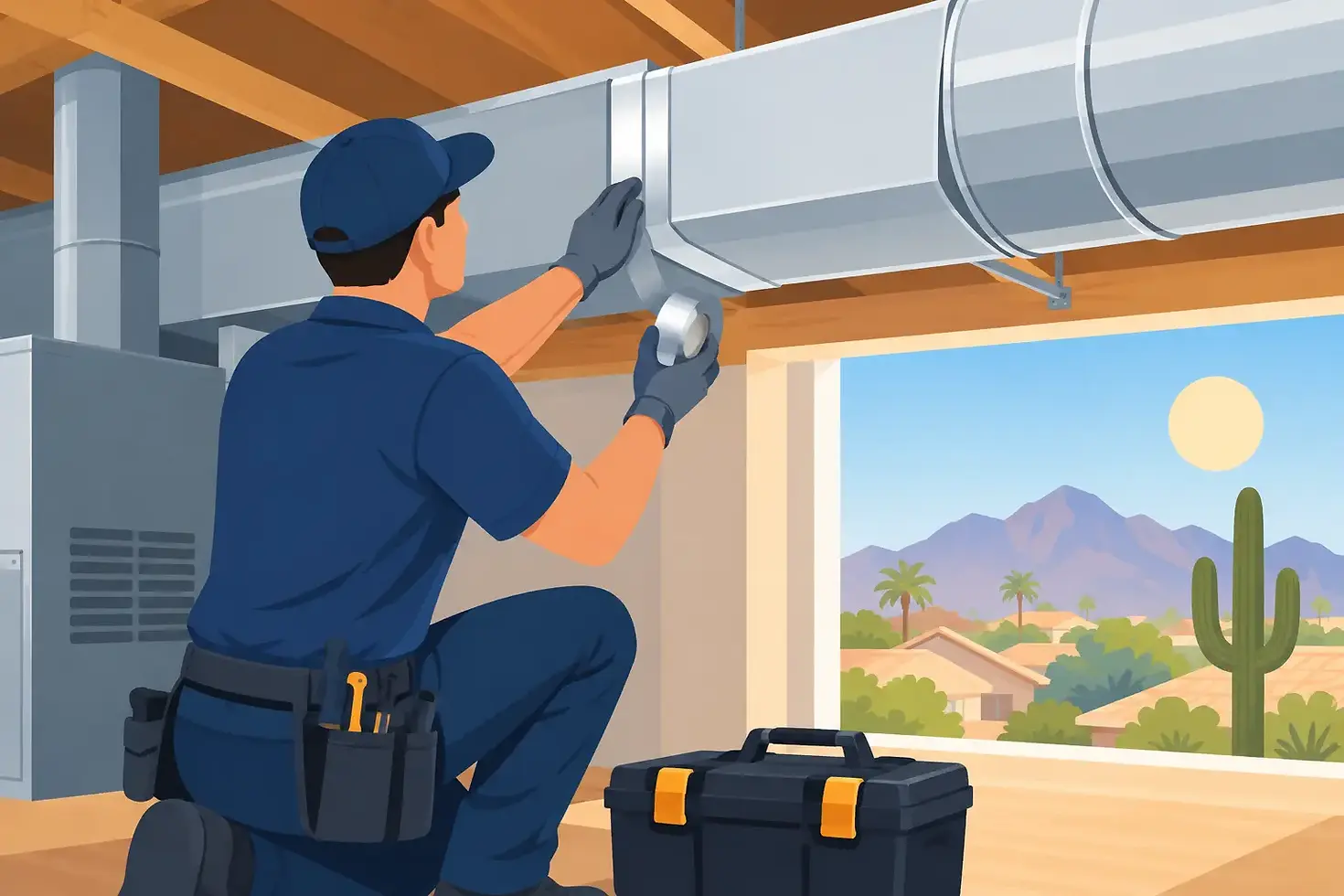
Some minor tasks are appropriate for homeowners, but most duct repairs require more than a roll of tape. Standard cloth-backed duct tape is not designed for long-term HVAC sealing. In hot attic conditions, its adhesive can fail, leaving the same leak behind and creating a false sense of security.
Professional duct sealing generally uses approved mastic, properly rated foil tape, mechanical fasteners, and insulation repairs matched to the duct material and location. More importantly, a technician needs to determine why a joint failed. A flexible duct that has fallen may have inadequate support. A crushed section may be too long, sharply bent, or installed with excessive tension. Sealing the visible gap without correcting the underlying issue can restrict airflow and leave the system under strain.
Avoid attempting repairs when you see mold-like growth, animal activity, wet insulation, damaged wiring, or a duct that has separated near heating equipment. If you smell burning, natural gas, exhaust fumes, or strong chemical odors, turn the system off if it is safe to do so and seek prompt professional help. These conditions are not routine maintenance issues.
Why Duct Problems Matter More in Arizona
Ductwork in the Phoenix Valley commonly runs through unconditioned attic spaces. That means cooled air may travel through intense heat before it reaches your rooms. A leak in that environment loses more than air volume. It allows costly cooled air to escape while drawing hot attic air into the duct system.
Insulation is part of the repair, not an optional finishing step. When duct insulation is torn, compressed, or missing, the duct surface gains heat faster. Condensation can also become a concern in certain conditions, especially around poorly insulated sections. A qualified repair should check both the air seal and the insulation surrounding the duct.
Duct design also affects results. Adding more airflow to a hot room sounds simple, but an oversized or poorly placed run can upset pressure throughout the home. Closing several vents to force air elsewhere can create added resistance and may not solve the real problem. The right repair depends on duct size, system capacity, return-air pathways, room layout, and the condition of the equipment.
What a Professional Ductwork Visit Should Include
A reliable ductwork service begins with diagnostics, not assumptions. A technician should listen to your comfort concerns, inspect accessible ducts and connections, evaluate airflow at affected rooms, and check the system’s operation. Depending on the issue, the inspection may include the return side, supply branches, plenums, registers, insulation, and areas where ducts pass through walls or ceilings.
The recommended repair may be as targeted as reconnecting and sealing a loose branch line. In other cases, damaged flexible duct needs replacement, sagging runs need proper support, or a return path needs correction. Older homes may have duct materials or layouts that call for a larger upgrade rather than repeated patches.
Ask for a clear explanation of the problem, the proposed repair, and the expected benefit. Honest service includes discussing trade-offs. A small repair can restore comfort when the rest of the duct system is sound. If multiple sections are deteriorated or the design is severely undersized, replacing a larger portion may provide better long-term value than paying for several separate repairs.
Preventing Future Duct Damage
After repairs are complete, regular HVAC maintenance helps protect the duct system and the equipment connected to it. Change filters on a schedule appropriate for your home, pets, allergies, and filter type. Keep registers clear, and watch for new hot or cold spots before they become a larger issue.
If your home has accessible attic ductwork, ask during routine service whether the ducts remain properly supported and insulated. Pest activity, roof work, home renovations, and attic storage can all disturb duct runs. Avoid placing boxes or walking paths on flexible ducts, and make sure anyone working in the attic understands where the system is located.
For homeowners in Tempe, Mesa, and across Maricopa County, fast action can prevent a comfort issue from becoming a peak-season breakdown. The Trusted Tech Cooling and Heating LLC provides professional diagnostics and ductwork service with the straightforward guidance local families need when dependable cooling matters most.
Comfort should not depend on whether air can find its way through a damaged attic duct. If your home has uneven temperatures, weak airflow, unexplained dust, or a system that seems to run without catching up, arrange a qualified inspection before the next stretch of extreme heat puts more strain on your system.


Comments